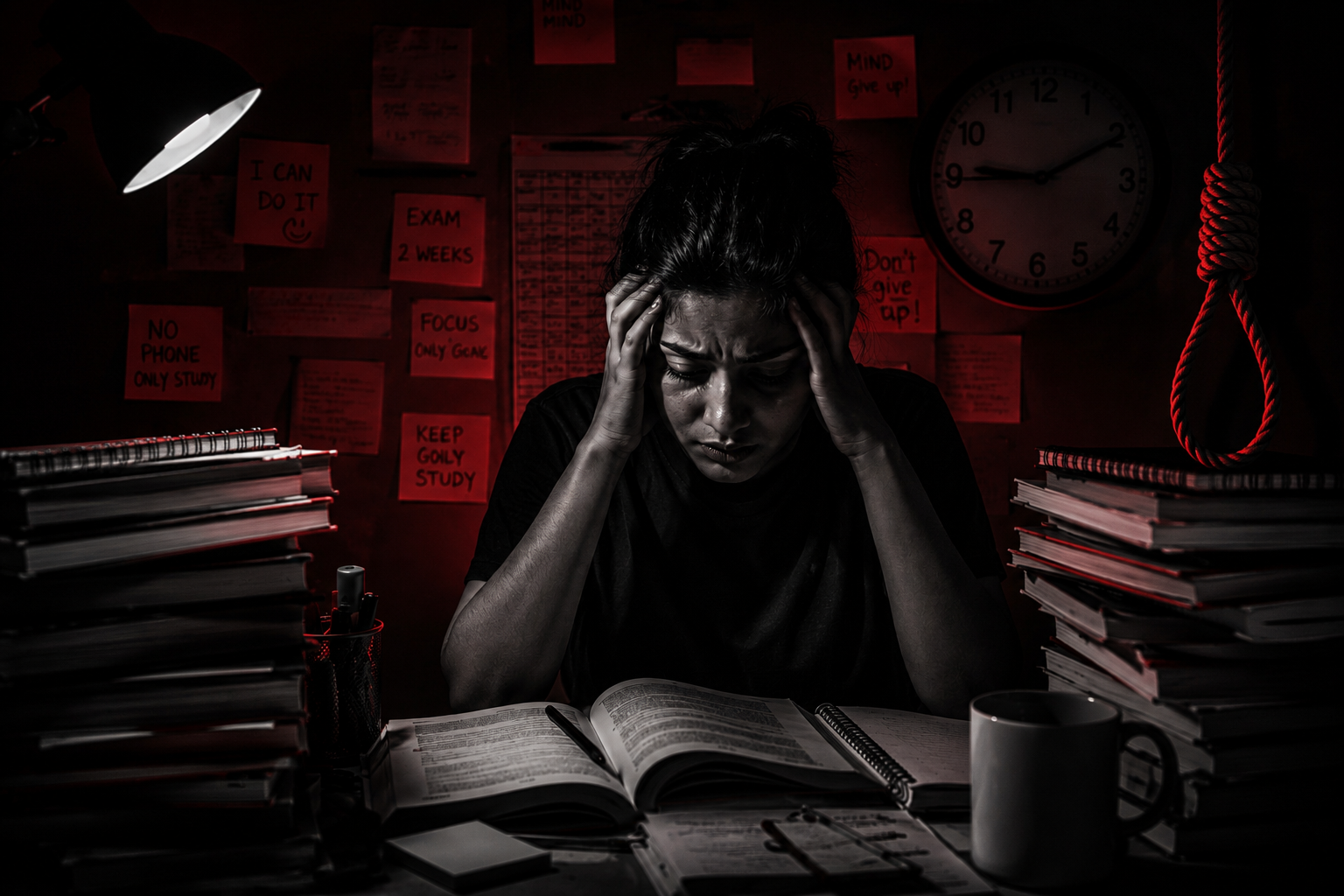
Every year, India loses thousands of young lives to suicide, leaving behind grieving families and unanswered questions. Behind many smiling faces are silent struggles with academic pressure, career uncertainty, loneliness, financial stress, social media comparisons, and the fear of disappointing loved ones. According to the National Crime Records Bureau (NCRB), student suicides have continued to rise, while studies and child welfare organizations warn that anxiety, depression, and emotional distress among young people are becoming increasingly common.
Mental health experts say that today’s generation is growing up in a world where success is often measured through marks, ranks, salaries, and social media achievements. Many students hesitate to speak about their emotions because they fear being judged, misunderstood, or labelled as “weak.” UNICEF notes that many young people experience anxiety, mood swings, and emotional challenges, yet only a small number seek professional help due to stigma and lack of awareness.
Parents also play a crucial role in this conversation. Experts believe that while families naturally want their children to succeed, constant comparison, unrealistic expectations, or dismissing emotional pain can unintentionally deepen a child’s distress. Young people do not always need solutions—they often need someone who will listen without criticism. At the same time, students must understand that failure is not the end of life. An exam, a rejection, or a setback can be overcome, but a life lost can never be replaced. Open conversations, emotional support, regular family time, and encouraging children to ask for help can make a significant difference. Research on student suicides has identified academic pressure, low self-esteem, and multiple social factors as important contributors, highlighting the need for early intervention.

Mental health professionals recommend simple but powerful preventive steps: encouraging honest communication at home, reducing the stigma around counselling, balancing studies with sleep, exercise, and hobbies, limiting unhealthy social media comparisons, and ensuring that schools and colleges provide accessible mental health support. Friends should also take warning signs seriously—such as withdrawal, hopelessness, or talking about giving up—and encourage timely help rather than ignoring them. Prevention begins with compassion, awareness, and the courage to ask a simple question: “Are you really okay?”
India is home to one of the world’s largest youth populations, and every young life carries dreams, talent, and limitless potential. The country’s greatest achievement will not be measured only by economic growth or examination results, but by how well it protects the emotional well-being of its young generation. Every student deserves to know that they are loved beyond their marks, valued beyond their achievements, and that asking for help is a sign of strength—not weakness. A conversation today could save a life tomorrow.