The world of work is undergoing its biggest transformation in decades. Artificial intelligence (AI), automation, climate-focused industries, digital technologies, and shifting economic priorities are redefining the skills employers value. According to the World Economic Forum’s Future of Jobs Report 2025, nearly 39% of today’s core workplace skills are expected to change by 2030, making continuous learning and adaptability more important than ever. The report also projects a net increase of 78 million jobs globally by 2030, while emphasizing that rapid upskilling will be essential for workers to remain competitive.
The shift is also changing how employers hire. Increasingly, organizations are adopting a skills-first approach, giving greater importance to demonstrated abilities than to academic qualifications alone. The OECD notes that employers are placing greater emphasis on practical competencies, digital capabilities, and transferable skills as labour markets evolve in response to technological, demographic, and environmental changes. This transition is creating new opportunities for young people who invest in lifelong learning, industry certifications, internships, and real-world experience alongside formal education.
While digital literacy and AI proficiency are becoming essential, experts argue that human skills will remain the strongest differentiator. The World Economic Forum identifies analytical thinking as the most sought-after skill, followed by resilience, flexibility, leadership, creative thinking, motivation, curiosity, technological literacy, empathy, and social influence. These competencies enable professionals to solve complex problems, collaborate effectively, and adapt to rapidly changing workplaces—qualities that machines cannot easily replicate.
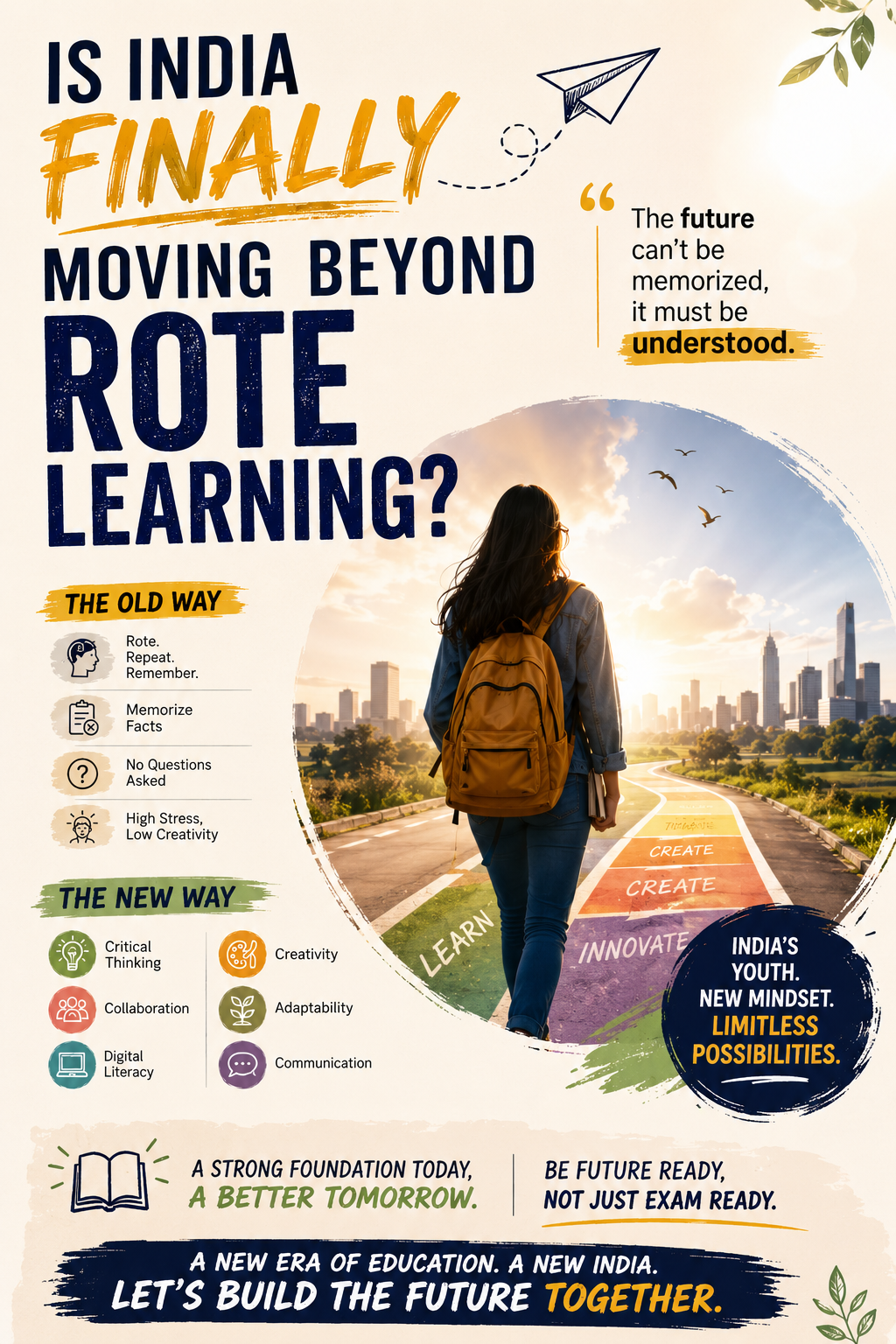
Education systems are also being encouraged to move beyond rote learning. The OECD’ s Future of Education and Skills 2030 framework emphasizes student agency, critical thinking, collaboration, ethical decision-making, and lifelong learning as key competencies for the future. Rather than preparing students for a single profession, institutions are increasingly expected to equip learners with the ability to continuously acquire new skills throughout their careers.
For Indian youth, the opportunities are significant. The country’s expanding digital economy, startup ecosystem, renewable energy sector, healthcare, fintech, cybersecurity, and AI-driven industries are expected to generate demand for professionals with multidisciplinary skills. Experts advise students to build portfolios through internships, freelancing, entrepreneurship, open-source projects, and professional networking while strengthening communication, financial literacy, and ethical use of technology. Those who combine technical expertise with creativity, emotional intelligence, and adaptability are likely to lead the workforce of 2030.
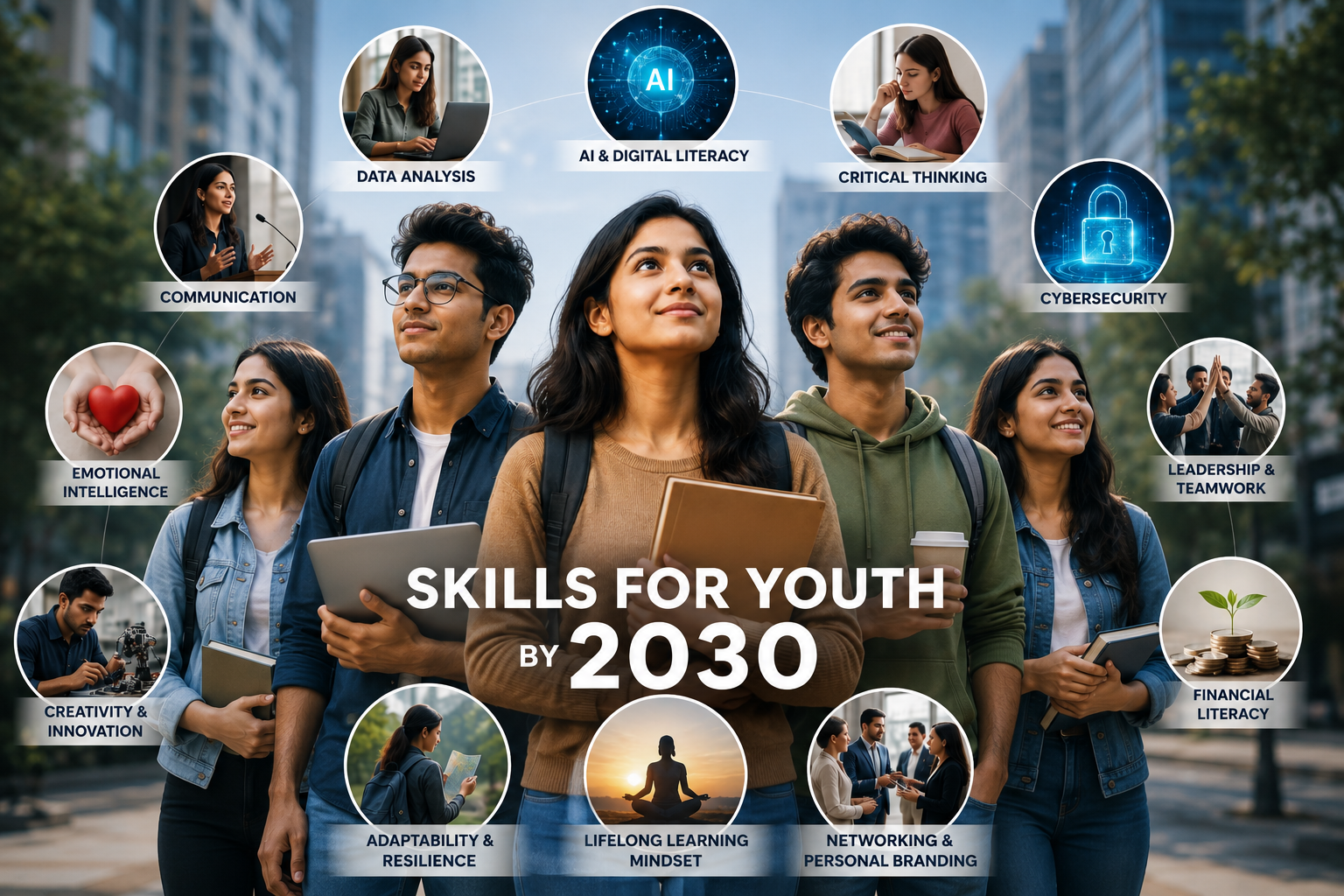
The essential skills for career growth in a changing world are –
1) AI and Digital Literacy
2) Analytical & Critical Thinking
3) Problem-Solving
4) Data Analysis
5) Communication & Public Speaking
6) Emotional Intelligence
7) Creativity & Innovation
8) Leadership & Teamwork
9) Adaptability and Resilience
10) Cybersecurity Awareness
11) Financial Literacy
12) Entrepreneurial Mindset
13) Project Management
14) Networking & Personal Branding
15) Lifelong Learning and Continuous Upskilling